

Quick Answer
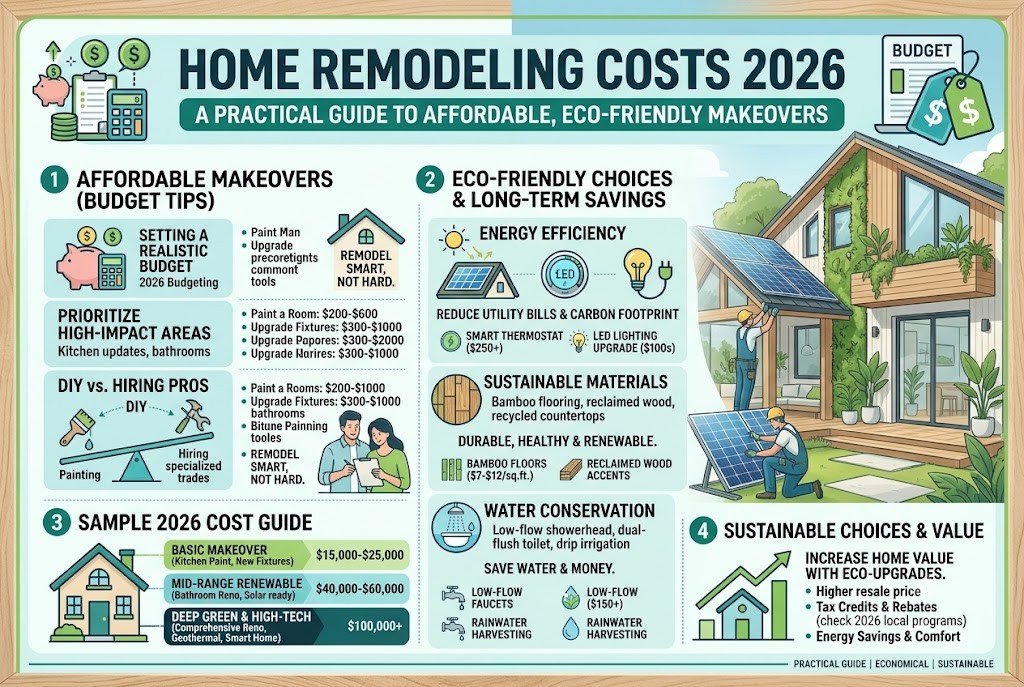
Home remodeling costs in 2026 vary by project scope: minor cosmetic updates (paint, hardware, lighting) typically run $500–$5,000, mid-range remodels like a kitchen or bathroom refresh fall between $10,000–$30,000, and full-scale renovations can exceed $50,000. Homeowners can significantly lower these figures with affordable home makeover strategies — refacing instead of replacing, phased renovations, and eco-friendly materials that reduce long-term utility costs even when upfront pricing is comparable.
Key Facts Table
| Project | Average Cost Range (USA) | Affordable Alternative |
|---|---|---|
| Kitchen Remodel | $15,000–$40,000 | Cabinet refacing: $3,000–$7,000 |
| Bathroom Remodel | $8,000–$25,000 | Fixture swap + paint: $1,500–$4,000 |
| Flooring | $3–$15 per sq. ft. | Laminate or LVP: $2–$5 per sq. ft. |
| Exterior Paint | $3,000–$8,000 | DIY paint: $500–$1,500 |
| Roof Replacement | $8,000–$20,000 | Roof repair/patch: $300–$1,500 |
Introduction
Remodeling costs are often the single biggest barrier between homeowners and the space they actually want to live in. At Home, we hear the same question constantly: “How do I get real, lasting improvements without blowing the budget?” The good news is that 2026 offers more affordable and eco-friendly paths to a home makeover than ever, from material substitutions to phased project planning. This guide breaks down real cost ranges, comparisons, and practical strategies so you can plan a remodel that fits your actual budget — not just an idealized one.
What Drives Home Remodeling Costs?
Labor vs. Materials
Labor typically accounts for 40–65% of a remodeling budget, according to industry cost guides from organizations like the National Kitchen & Bath Association. This is why DIY-friendly projects — where you supply your own labor — offer the biggest savings percentage.
Scope Creep
Unplanned changes mid-project are one of the most common reasons remodels exceed budget. Locking in a detailed scope of work before signing a contractor agreement helps avoid costly mid-project revisions.
Material Selection
Choosing mid-range materials over premium options (quartz composite instead of natural marble, engineered wood instead of solid hardwood) can cut material costs substantially while maintaining a similar aesthetic.
Affordable Home Makeover Strategies
1. Refresh Instead of Replace
Refacing cabinets, reglazing bathtubs, and refinishing hardwood floors typically cost 30–60% less than full replacement while delivering a comparable visual upgrade.
2. Phase the Project
Breaking a full renovation into stages — say, kitchen this year, bathroom next year — spreads cost over time and avoids high-interest financing.
3. Shop Off-Season and Clearance
Contractors and suppliers often discount labor and materials during slower seasons (typically late fall and winter in most U.S. regions).
4. DIY the Demolition
Handling demo work yourself, where safe and code-compliant, can shave a meaningful percentage off total labor costs.
Step-by-step: Budgeting a remodel
- Define the full scope of the project in writing.
- Get at least three itemized contractor quotes.
- Add a 10–20% contingency buffer for unexpected issues.
- Separate “must-have” from “nice-to-have” line items.
- Confirm financing or savings cover the total before starting.
Eco-Friendly Home Renovation: Cost vs. Long-Term Value
Eco-friendly renovations — like added insulation, ENERGY STAR-rated windows, and low-flow plumbing fixtures — often carry a modest upfront premium but reduce ongoing utility costs. The U.S. Environmental Protection Agency notes that ENERGY STAR-certified products are independently verified to meet energy efficiency standards that can meaningfully lower household energy bills over time.
Comparison: Traditional vs. Eco-Friendly Remodeling
| Factor | Traditional Remodel | Eco-Friendly Remodel |
|---|---|---|
| Upfront Cost | Often lower | Slightly higher (5–15%) |
| Long-Term Utility Savings | Minimal | Significant |
| Material Sourcing | Standard retail | Sustainable/certified |
| Resale Appeal | Standard | Growing buyer preference |
| Environmental Impact | Higher | Lower |
Best Home Improvement Ideas on a Budget
- Paint cabinets instead of replacing them.
- Install a water-efficient showerhead and faucet aerators.
- Add attic insulation — one of the highest ROI energy upgrades available.
- Replace outdated light fixtures with LED alternatives.
- Refinish existing hardwood rather than installing new flooring.
Frequently Asked Questions
How much does an average home remodel cost in the USA? Costs vary widely by scope, but most homeowners spend between $10,000 and $30,000 on a mid-range single-room remodel.
What is the cheapest way to remodel a kitchen? Cabinet refacing or repainting combined with new hardware and lighting typically delivers the biggest visual change for the lowest cost.
Are eco-friendly renovations more expensive? They can carry a modest upfront premium, but the added cost is often offset by lower utility bills over time.
What remodeling projects offer the best return on investment? Minor kitchen updates, garage door replacement, and exterior improvements tend to recoup a strong percentage of costs at resale.
Should I remodel in phases or all at once? Phasing helps manage cash flow and avoid financing costs, though it may extend the overall project timeline.
How can I avoid remodeling scope creep? Lock in a detailed written scope of work with your contractor before construction begins, and route any changes through a formal change order.
Is DIY demolition safe? For non-structural, non-electrical work like removing cabinets or old flooring, DIY demo is generally safe if you follow basic safety precautions and check for hazards like asbestos in older homes.
What’s a realistic contingency budget for a remodel? Most experts recommend setting aside 10–20% of your total budget for unexpected issues.
Do eco-friendly upgrades qualify for tax incentives? Some energy-efficient upgrades may qualify for federal or state incentives — check current guidelines through the U.S. Department of Energy or a tax professional.
What’s the most cost-effective flooring option? Luxury vinyl plank (LVP) and laminate offer durability and style at a lower price point than solid hardwood or natural stone.
Key Takeaways
- Labor typically makes up 40–65% of remodeling costs.
- Refacing and refinishing deliver strong savings over full replacement.
- Eco-friendly upgrades cost more upfront but reduce long-term utility bills.
- A written scope of work and contingency budget prevent cost overruns.
- Phased renovations help manage cash flow without sacrificing quality.
Conclusion
Affordable and eco-friendly don’t have to be mutually exclusive goals in a home remodel. By understanding where your money actually goes — labor, materials, and scope — you can make smarter substitutions that protect both your budget and your home’s long-term efficiency. Start with a clear written plan, prioritize projects with the strongest cost-to-impact ratio, and build in a contingency buffer before you break ground.